Your cancel button is not a retention strategy
U MAD, BRO? Your customer found the cancel button. A screen-by-screen teardown of cancellation friction, misleading retention numbers and the engineering needed to let people leave.
Read the articleOne subscription can accidentally fund dozens of workloads. Before promising unlimited AI, connect pricing, account ownership and usage rules in the product.
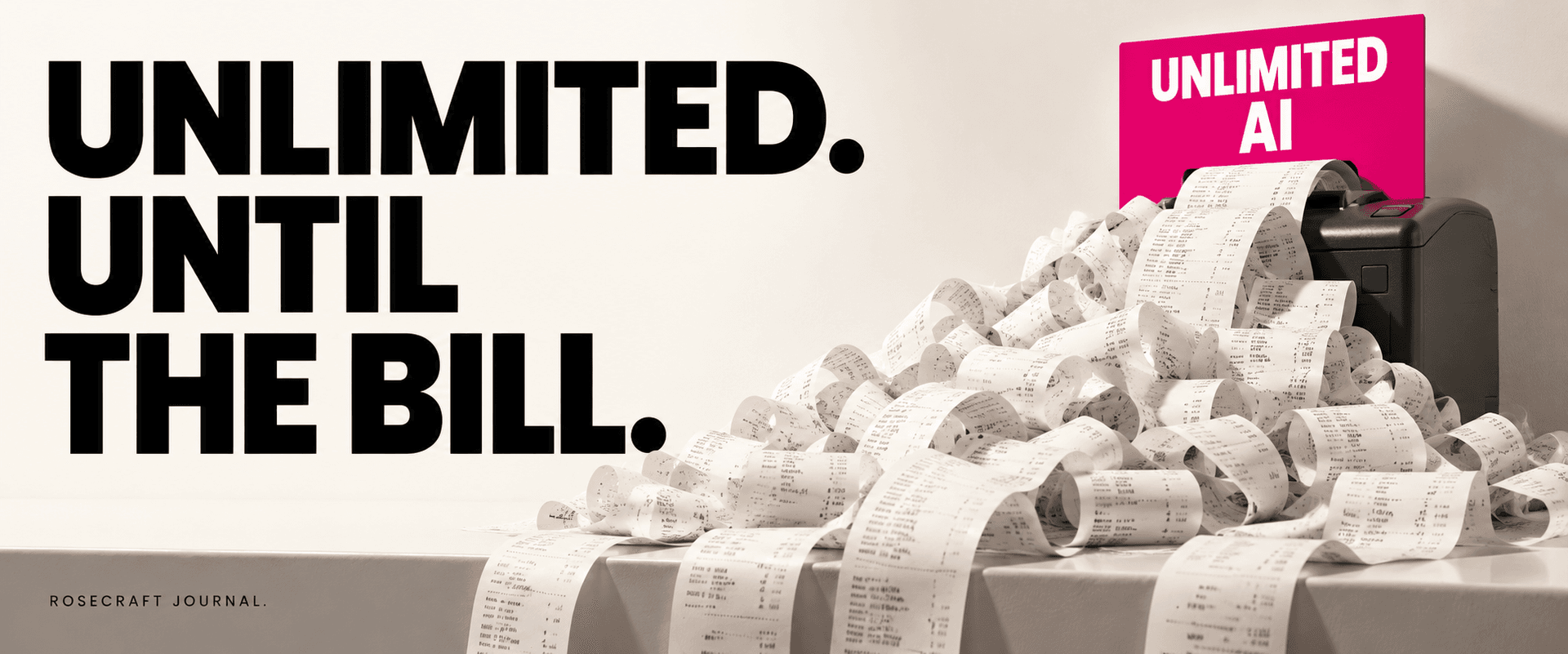
“Unlimited AI” is a brave promise when you’re paying for every request.
It looks excellent on a pricing page. One subscription. No complicated decisions. Customers can get on with their work. I understand the appeal, and a flat monthly price can be the right choice.
But before you put that word above the buy button, someone needs to answer a less exciting question: what happens when a customer actually uses the product as much as you’ve invited them to?
If the answer involves hoping they don’t, the product needs more work.
Here’s a hypothetical product. A subscription includes AI research and lets customers create workspaces for different businesses. Each workspace can have its own connected accounts, scheduled jobs and saved instructions. That sounds useful. An agency could use it to organize client work.
Now imagine the allowance is attached to each workspace because that was the easiest place to put the counter. A paying customer creates fifty workspaces. The application gives each one a fresh allowance.
The customer has bought one subscription. Your software has quietly handed out fifty allocations of work. That does not necessarily mean fifty times the cost; actual usage determines that. It does mean your original allowance no longer describes what you agreed to fund.
Nobody needs to be attacking you. A perfectly reasonable customer can follow the interface, stay within every visible rule and expose a pricing assumption you never implemented.
That is an awkward moment to start calling normal product use “abuse.”
A person who signs in, an organization that pays, and a workspace where work happens are different things. They might start as the same thing in your first demo. They will not necessarily stay that way.
For the hypothetical agency plan, you might deliberately sell one shared allowance across all its workspaces. Another plan might charge for each active client workspace. Either can be reasonable. The important part is choosing, explaining the choice and making the application enforce the same rule.
Every expensive job needs to resolve to the account responsible for it. Creating another workspace should not accidentally create another free budget. Inviting a colleague should not reset consumption. Moving work between teams needs a defined effect on access and billing.
You also need to decide what customers can still do if a subscription expires or a payment fails. Blocking new paid processing can be appropriate. Making their existing work inaccessible without warning is a different decision, and deserves separate thought.
A checkout can collect money correctly while the application continues granting the wrong access. A usage chart can accurately report yesterday’s cost after today’s jobs have already spent another day’s budget.
For a plan with a hard processing allowance, the application needs to check capacity before starting work, account for work already in progress and reconcile what the job actually consumed. Otherwise several simultaneous jobs can all see the same remaining balance and each assume it is theirs to spend.
Retries need a policy too. A repeated delivery of the same event should not create a second customer charge. A genuinely repeated model request may still incur a provider cost. Your records should distinguish those cases, including when you decide to absorb the cost of a failed attempt.
These details belong in the product design and acceptance tests. They are worth agreeing before launch, while changing the rules is still cheaper than explaining them to paying customers.
This doesn’t mean every founder needs a bewildering credit system or a price that changes every time somebody clicks.
In its October 13 discussion of AI monetization, Stripe describes companies combining subscriptions with usage allowances and giving customers more visibility and control over spending. That supports a useful design direction: a simple purchase can still have carefully defined consumption behind it.
A flat plan can work for a sufficiently bounded workload. So can a subscription with an included allowance, a charge per completed operation, or a larger plan agreed with a high-volume customer. The choice depends on what people are buying and what it costs you to deliver it reliably.
Scott Woody makes a related distinction in his October 1 article on token billing: measuring model consumption internally does not require making tokens the thing customers buy. Your operating costs and your customer’s understanding of value need not use the same units.
A customer buying document processing should be able to understand what counts as a document, what happens with a very large one and whether a failed operation uses their allowance. “Credits” without a clear explanation just moves the confusion to another word.
If your plan has a meaningful limit, put it where the customer makes the decision. Explain whether reaching it pauses work, queues it, offers an upgrade or requests approval for additional spend. Don’t promise unlimited use and make the boundary a surprise.
Before launch, I’d walk through the pricing with a realistic busy customer in mind. Give that customer several workspaces, invite their team, run jobs at the same time, interrupt a job and retry it. Then compare the work delivered, the provider usage and the amount you intend to charge.
Include a quiet month too. The cheapest plan on paper may feel expensive when someone pays for capacity they rarely use. Good pricing needs to make sense to both sides of that relationship.
Heavy use can be excellent news. It may mean the product is useful enough to become part of somebody’s working day. You want to be able to welcome that customer, explain their options and serve them without discovering that success breaks your own rules.
At Rosecraft, we build applications and the systems behind them. For an AI product, that can mean connecting account ownership, subscriptions, usage tracking and access rules so the pricing page describes what the software actually does.
If you’re ready to hear what needs changing, send us your proposed plans and a walkthrough of the work a customer can trigger. We can review the weak points and scope the implementation with you. Tell us what you’re building, or message me directly.
Your best customer should be someone you’re pleased to see using the product.

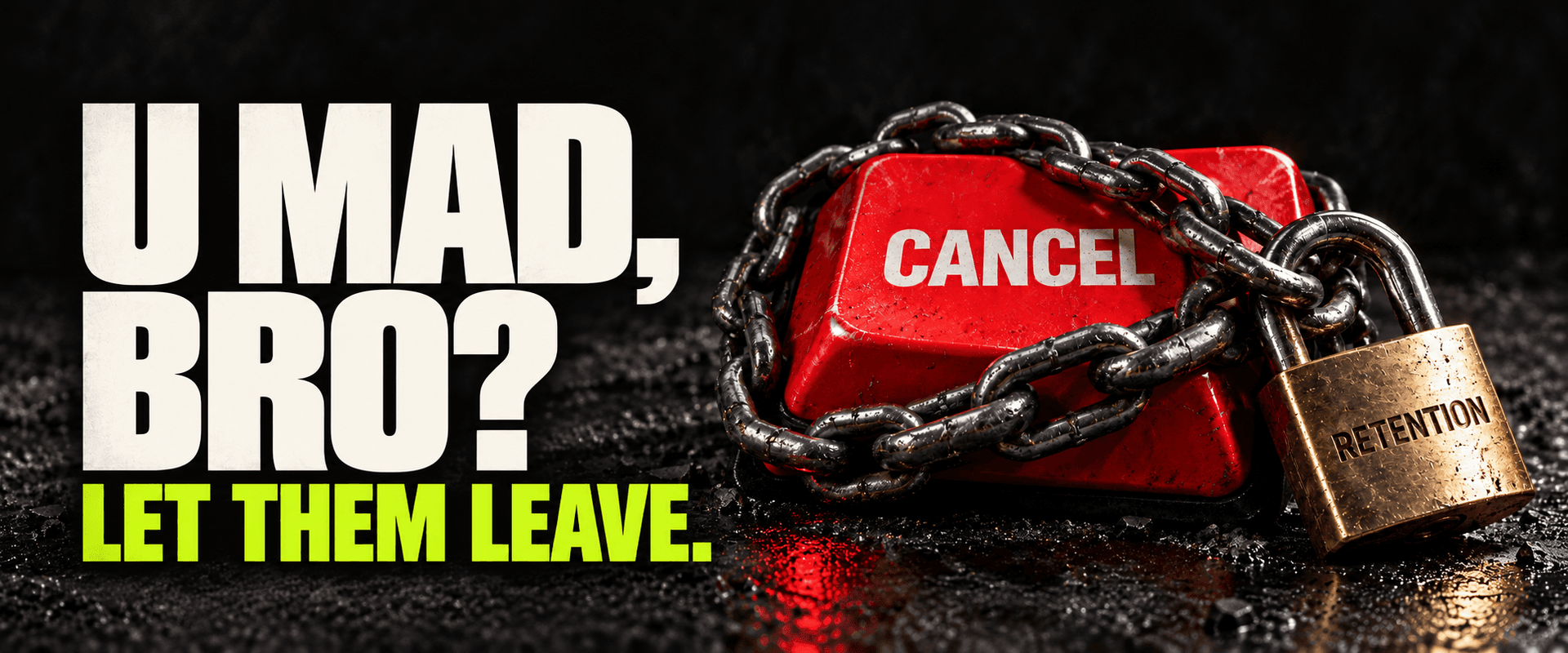
U MAD, BRO? Your customer found the cancel button. A screen-by-screen teardown of cancellation friction, misleading retention numbers and the engineering needed to let people leave.
Read the article
Beautiful charts can leave expensive work unfinished. How to tell whether your business needs another dashboard, a better integration or a smaller change.
Read the article
Before paying for more traffic, check what you make willing buyers do. When accounts help, when guest checkout makes sense, and how to find the friction.
Read the articleWith your permission, Google Analytics helps us understand which pages people visit. Analytics cookies stay off until you accept. You can change this in Cookie settings.